
Associate Superintendent
Vanessa Garcia
Email
Phone: (505)454-5701
Admin Assistant
Melissa Rivera
Email
Phone: (505)454-5700
Slider is playing
Parent and Guardian Involvement
It is the goal of this office to develop a strong Parent Advisory Council so that parents will have the opportunity to share their ideas, strengths, and support for schools. Our community has a wealth of individuals who are devoted to the education of our youth, and we invite their perspective as we review our decisions and programs for the schools. We are committed to continually looking for better ways of involving our parents and community so that they will also be invested in the vibrancy of our school system.
We invite parents/guardians and community members to attend our annual budget meetings, and have input on federal funding allocations. We stress the importance of public input.
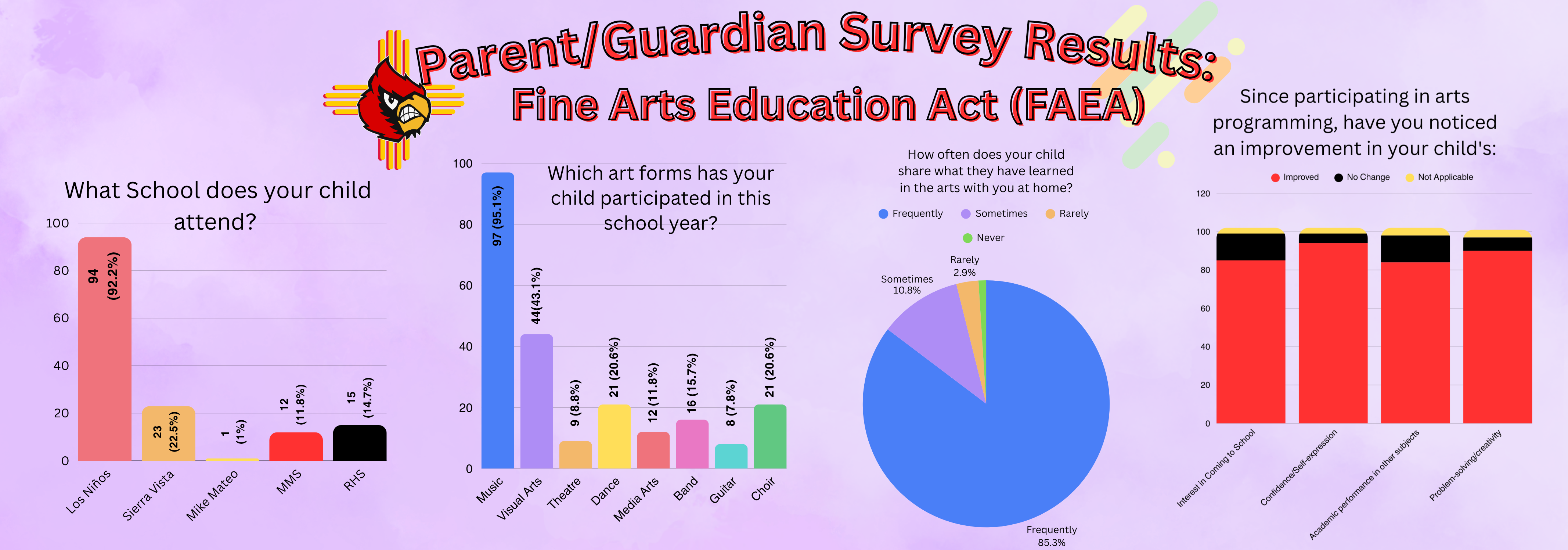
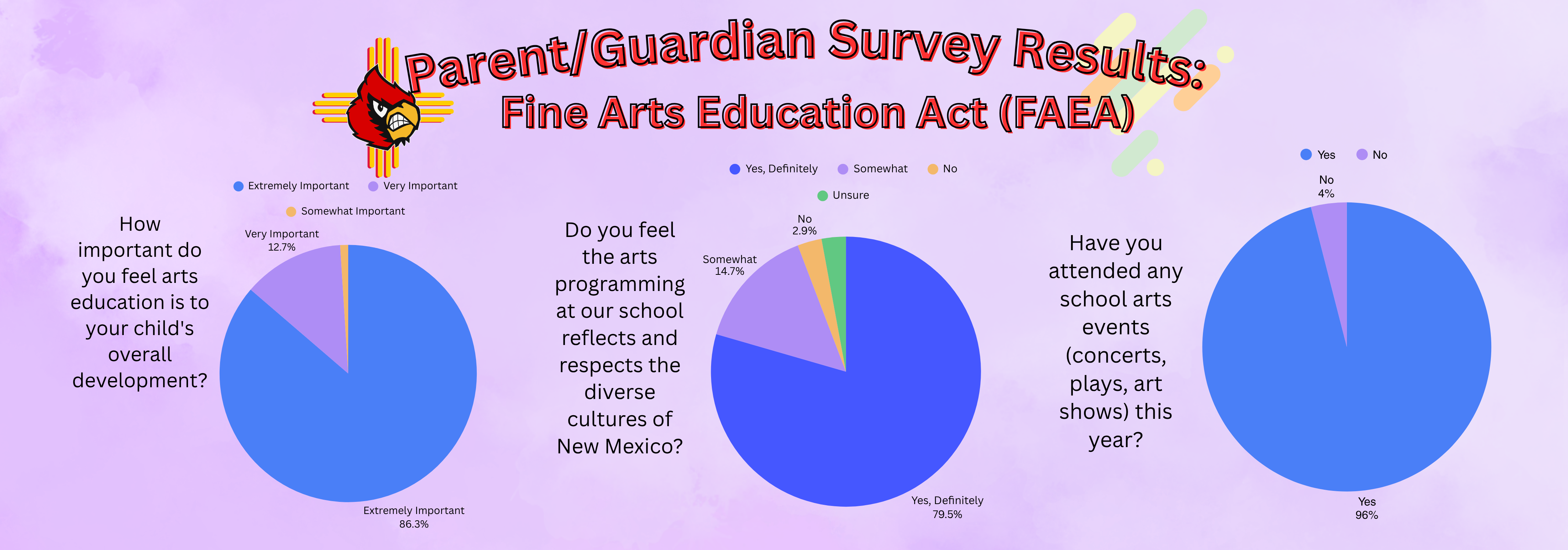
What is one thing you love about our current arts program?
Teacher Quality and Involvement:
Multiple parents praised the teachers for being wonderful, very welcoming, enthusiastic, having great ideas, being involved, and doing amazing work, with specific mention of Mrs. Madrid, the elementary music teacher.
Positive Student Experience:
The program is loved because children enjoy it, have fun, are happy, and are excited to participate; it is often described as the child's favorite part of the day.
Opportunities for Expression and Creativity:
The arts program allows students to be creative, express themselves freely, expand on individual interests, develop imaginary minds, explore their talents, and be exposed to new things and cultures (including incorporating Spanish).
Building Confidence and Skills:
The program is highly valued for building children's confidence, teaching them new skills, showing effective results, and promoting student growth, with one parent noting their child is retaining what they learn.
Performances and Events:
Parents consistently love the opportunity to attend and watch their children perform in concerts, dances, singing programs, art shows, and special events like Art Night.
What additional arts opportunities or digital tools (like filmmaking or graphic design) would you like to see offered to your child?
Digital Arts and Media:
The most frequently requested opportunities include Graphic Design, Filmmaking (or Movie/Film making, and Videography), and Photography. One respondent also suggested Digital design, digital media and games involving programming, and critical thinking guidelines for using AI.
Performance and Music:
Requests were made for more theater opportunities (Plays, Theater, Dance, and Theater for smaller kids), Orchestra classes, Band, Instrument playing, Choir, and Music making, including a suggestion for Mariachi. Several respondents also wanted more concerts and opportunities for students to show work or receive rewards/recognition, such as talent shows.
Visual and Sculptural Arts:
Respondents requested more hands-on activities, specifically mentioning more clay, Sculpture, and Drawing, as well as learning about different mediums of art and museum field trips.
Curriculum and Exposure:
General feedback included the desire for all of the above options and providing anything age-appropriate, suggesting that students should be asked what they are interested in and exposed to all available options. Additional non-arts programs requested were Speech and debate and World cultures.
Opportunities for Instructional Growth:
A parent suggestion highlighted the potential for more dynamic classroom engagement to further inspire student creativity and individual expression within the fine arts curriculum.
If your child was unable to enroll in an Arts program, what was the primary barrier? (e.g., scheduling conflicts, course availability, or fees)
Scheduling Conflicts:
Many parents stated they were unavailable and had scheduling conflicts. Often stating their work schedule conflicts directly with this.